Start with the job, not the platform
The right answer almost always falls out of the job-to-be-done. Field staff who need offline data and a camera have very different needs to a marketing team that wants a mobile-optimised booking flow.
We start every mobile engagement with the same question: what does this app do that a great mobile website cannot?
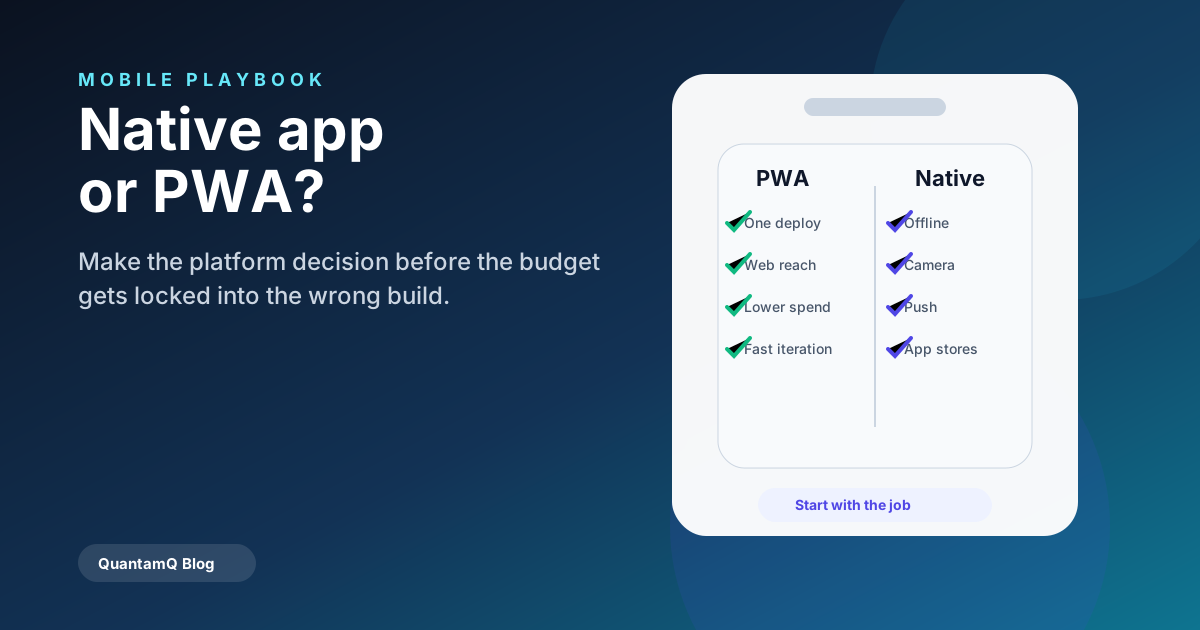
When a PWA is the right answer
Choose a Progressive Web App when most of the following are true:
- The app is mostly read-and-fill workflows — booking, dashboards, simple data entry.
- You do not need deep hardware integration (LiDAR, Bluetooth peripherals, background audio).
- App-store presence is a marketing nice-to-have rather than a distribution requirement.
- You want one codebase, one deploy, one bug surface.
When native (or React Native) is worth the cost
Go native when you need the camera and barcode scanning to be fast, offline data to be robust, push notifications to be reliable, or when app-store presence is itself the customer trust signal.
For nearly all Australian SMB cases that need native, React Native or Flutter is the right choice — one team, two stores, lower long-term cost than two separate native codebases.
Frequently asked questions
How much does a cross-platform mobile app cost in Australia?
A focused first version (one or two core flows, basic auth, one backend integration) typically lands between A$25,000 and A$75,000 in 2026. The cost driver is integrations and offline behaviour, not screens.
Can we ship a PWA first and go native later?
Yes, and it is often the smartest path. A PWA proves the workflow with real users, captures analytics, and clarifies what the native version actually needs to do — before the more expensive build.